Pilates Tips for Hypermobility
Hypermobility
What Is It?
Hey there my hypermobile friends,
Hypermobility is a super common trait that may predispose people to injury and issues due to increased elasticity in their tissues. They have increased mobility and flexibility in their joints and can often move beyond a normal range of motion. But it's not all fun- they may commonly experience pain, laxity in connective tissues, frequent dislocations, clicking/clunking, light headedness with position change, gut issues, MCAS, clumsiness, unsteadiness, and more.
Movement and exercise can present some challenges to those with hypermobility, yet exercise is actually key to condition management. Unfortunately, a regular exercise class is not the best format for those with hypermobility. Specific cues, modifications and an individualized programs are important. Since individualized cues is sort of my specialty, I've created a course for hypermobile individuals that will help empower students to live differently in their bodies to prevent injury and minimize pain.
My colleague Megan and I bring a fresh perspective on movement in our Pilates for Hypermobility course, held three times a year—and today, I’m sharing a few tips from it with you!
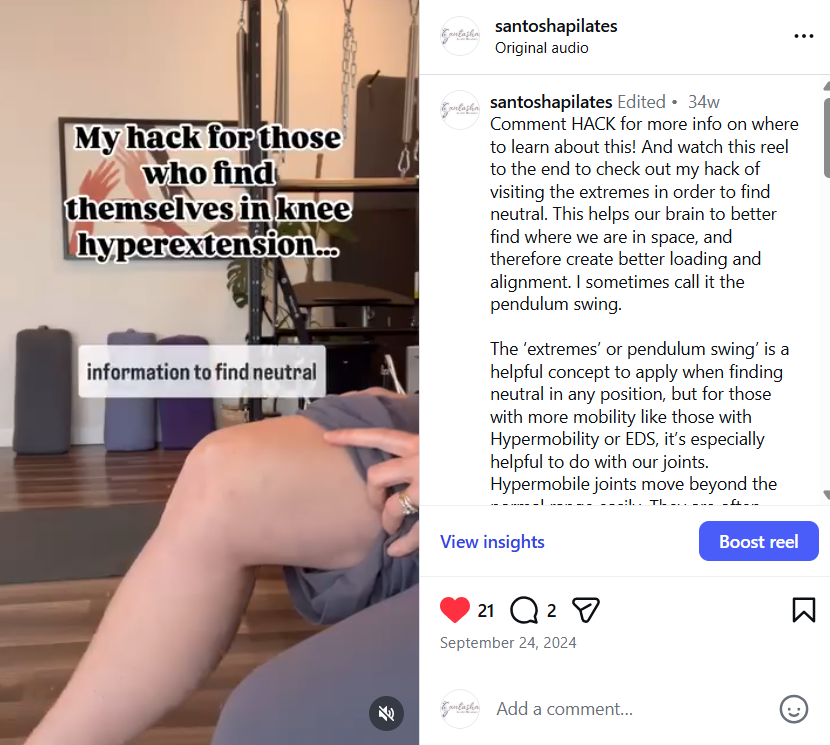
On Zero degrees of the Knees
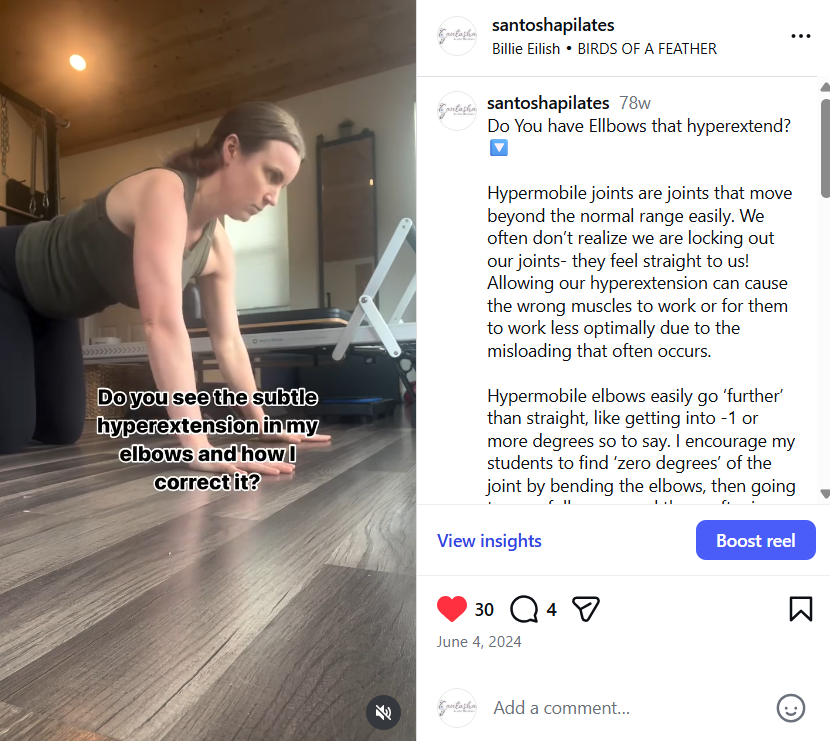
On Zero Degrees of the Elbows
HOT TIPS:
1) Center Your Joints - Knees and Elbows Edition
Without this key concept, it's tough to actually build strength when exercising. We use the term 'zero degrees' to refer to the joints- check out more about this mind blowing concept to those with hypermobility here about the knees and here about the elbows. These hacks alone, once mastered, have changed so much of the trajectory of strength building for my students, but there is a LOT more inside the course.
2) Slow Down Your Range to Build Real Stability
Hypermobile bodies can often move farther, but that doesn’t mean they should. One of the most powerful changes you can make is intentionally working slightly inside your full range of motion. By shortening the range just a bit, your stabilizers have a chance to wake up, your joints feel more supported, and you start building true integration instead of relying on end-range flexibility.
It ties beautifully into the principles of move for hypermobility that we explore in the course:
Integration: moving as one connected system
Stabilization: strength in the mid-range, not the extremes
Customization: choosing ranges that feel supportive
Body Awareness: all the subtle 'noticings' we teach you how to find
Consistency: repeating this practice as it becomes second nature, and keeping it a part of your lifestyle.
This small shift with range of motion can completely change how movement feels for someone with hypermobility. It's one of the first things that helps people feel stronger and safer almost immediately, and one of the things many of our students had no idea they were doing so often, in so many different movements and parts of their lives. We'll help you figure out where it shows up for you, as it's different for everyone!
WHY TAKE THE COURSE:
The PFH course has truly felt like a community gaining new knowledge about their own condition, sharing symptoms, thoughts and making connections about their body they hadn't yet discovered. It helps prepare you to participate more confidently in exercise by gaining new tools and cues specific to the hypermobile body. We want this for you, and hope you’ll join the next course, which is only offered three times per year.
You're in luck because the next Pilates for Hypermobility is coming up! Keep a eye on your email for when doors officially open for registration in early January. Click below to get on the waitlist so you'll have access to early bird pricing- yay!
Questions? Hit reply and ask away!
PS: If you'd like to get to get started with Pilates BEFORE the next course starts, that's an option! I support students with customized movement inside my membership, The Santosha Movement Society, for those hypermobile or not. You can either fill out the new student form to get started now, or hop on my regular newsletter to learn more about me and my offerings through a few welcome emails, notes on offerings, and infrequent newsletters from there on out. The New Student Form is just below- fill that out and next steps will be on their way to you!
PPS: Do you know someone that is hypermobile? I would appreciate you sending them this newsletter their way or asking me to send it to them. If you're receiving this email, you're already on the waitlist to be the first to know when the next course launches (soon! It's happening in February and registration starts very soon). To share with others, please direct them to the button below. And stayed tuned for an email when registration opens, coming soon!
Yours in Health,
Mandee Louie